Three Games. One Cabinet. Nintendo’s Strange Arcade Experiment.
There is a particular kind of arcade machine that makes you stop walking.
Not because it is louder than everything around it. Not because it has a twelve-foot screen, a plastic motorcycle, or a cabinet shaped like something that would require a building permit.
Sometimes it is because you recognize what is on the screen — but absolutely do not recognize what it is doing inside an arcade cabinet.
That is the Nintendo Super System.
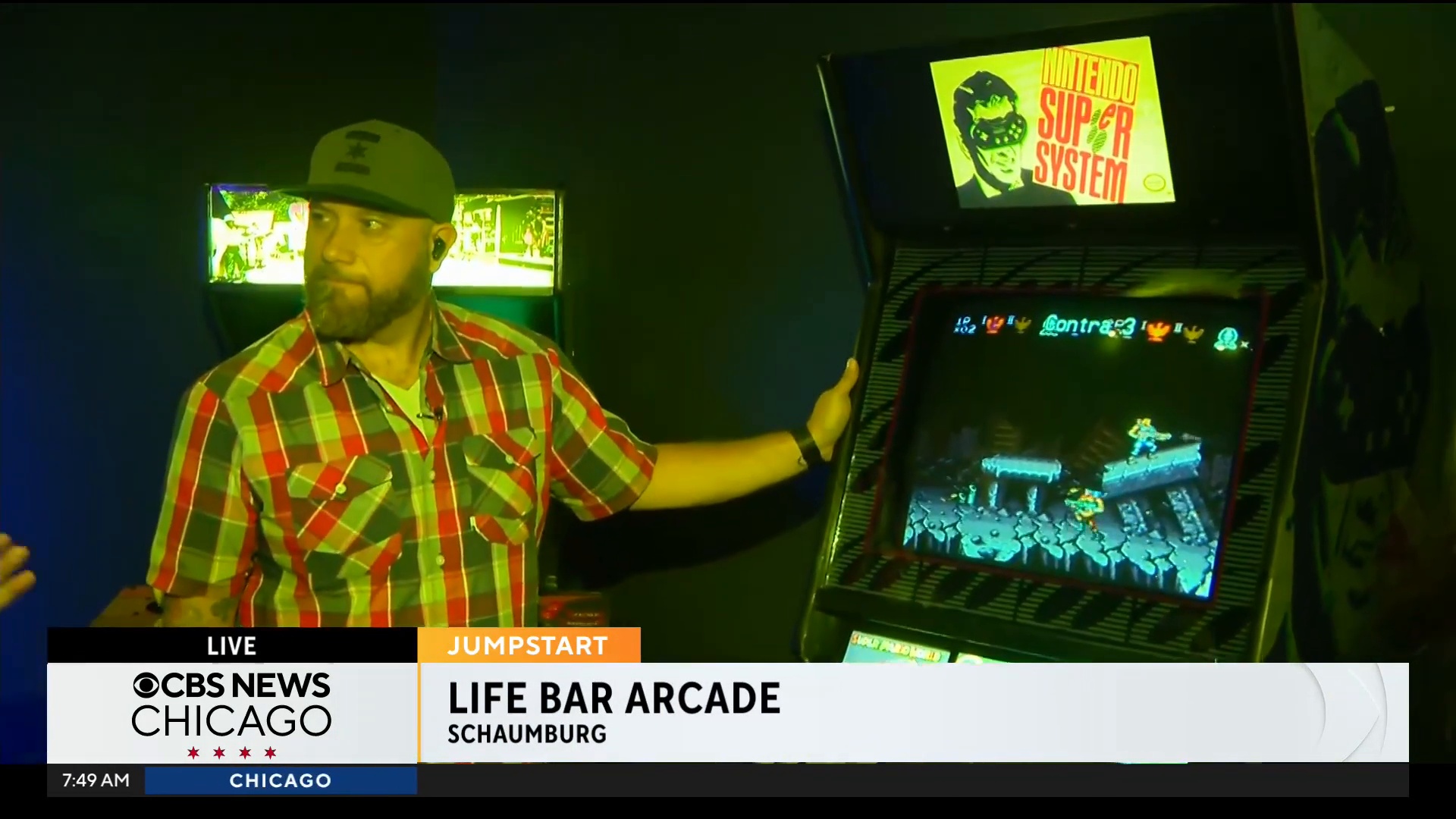
You may have seen us talking about it on CBS News Chicago. Sitting on the floor at Life Bar Arcade, the machine looks like Nintendo took a Super Nintendo, gave it a coin door, stood it upright, and sent it out into the world to see what would happen. That description is actually not very far from the truth.
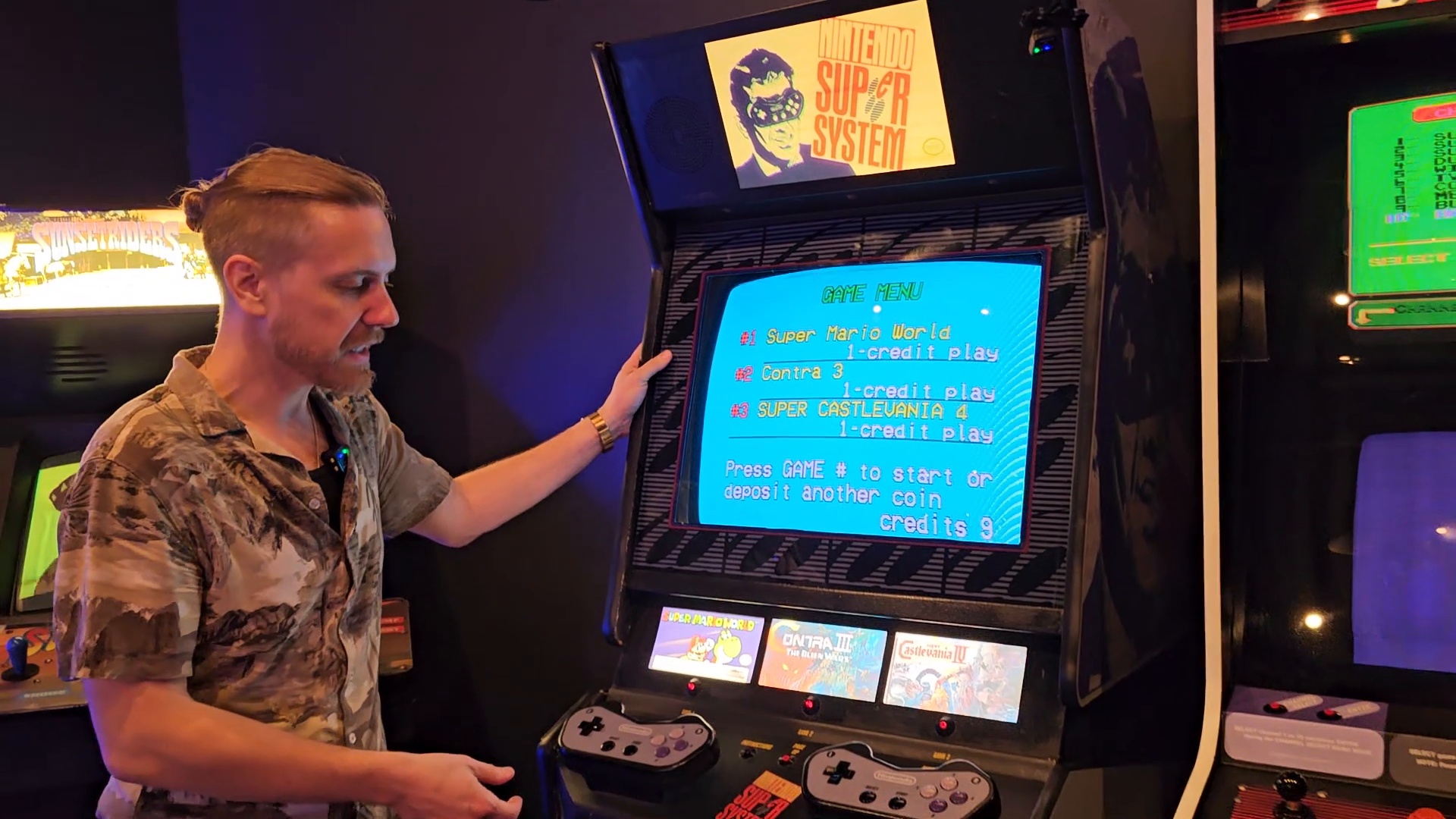
The Nintendo Super System arrived in 1991 as Nintendo’s 16-bit follow-up to the PlayChoice-10. Underneath the arcade hardware, it is closely related to the Super Nintendo Entertainment System, but Nintendo added the machinery necessary to turn home-console gaming into a coin-operated experience. The main board could hold three plug-in games at once, and players could choose between them from an on-screen menu.
That three-game setup is exactly what makes the Life Bar machine so much fun to mess with.
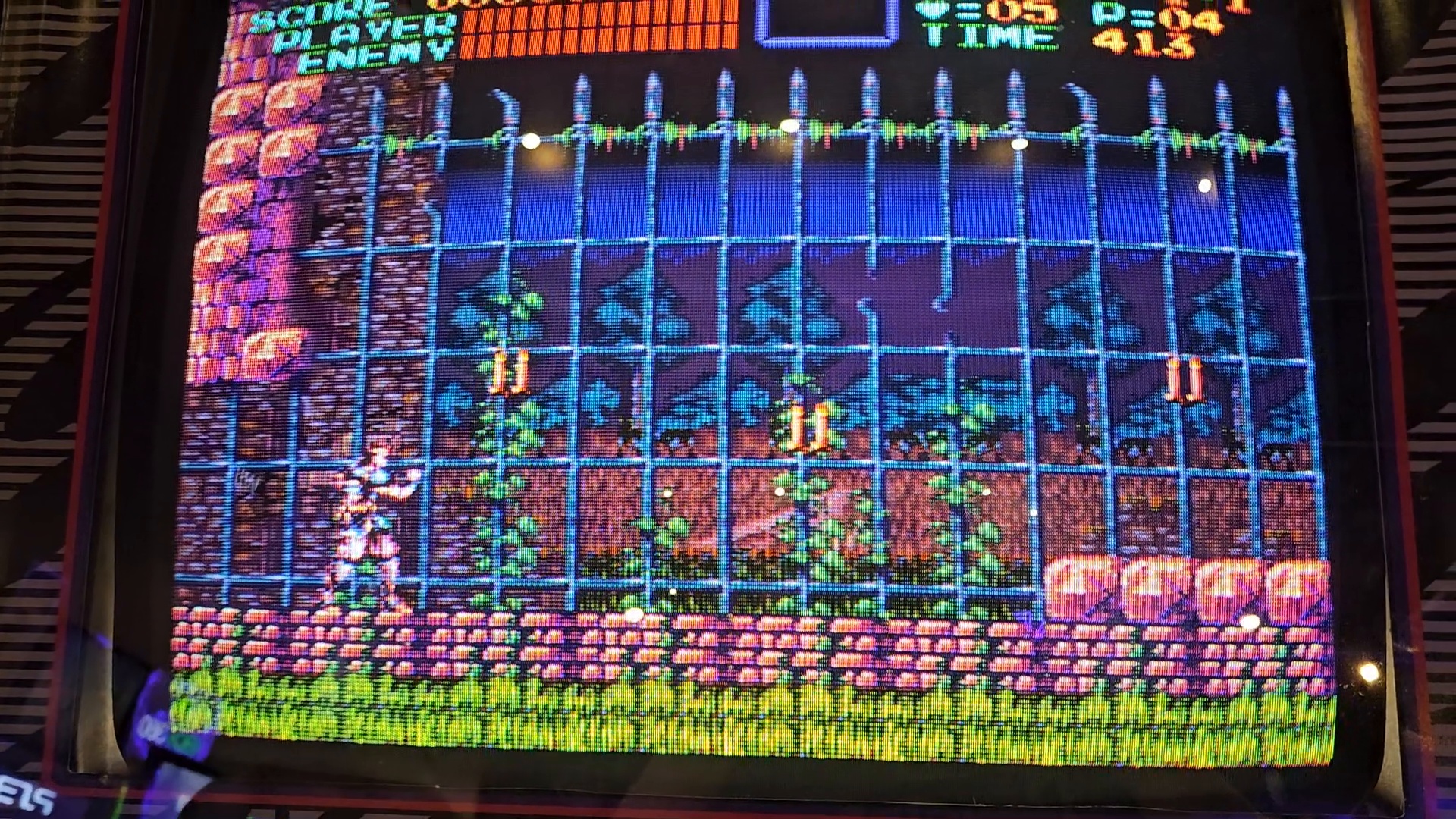
Hit the menu and you are greeted with three choices: Super Mario World, Contra III and Super Castlevania IV. One minute you can be stomping Koopas, the next you are unloading everything Contra can throw at the screen, and then suddenly you are whipping your way through Dracula’s neighborhood. One of the best reasons to spend time with Super Castlevania IV on the Nintendo Super System is the music. The game’s soundtrack has that unmistakable early-SNES sound: moody, gothic, dramatic, and way more atmospheric than you expect from something coming out of a 16-bit arcade cabinet.
The controls themselves are part of the weird charm. Instead of the traditional joystick-and-button layout you might expect from an arcade cabinet, Nintendo essentially incorporated Super Nintendo-style controllers into the control panel. The hardware supported the familiar SNES button arrangement, including Y, X, L, B, A and R.
Then there is the part that makes the Nintendo Super System distinctly an arcade machine: time.
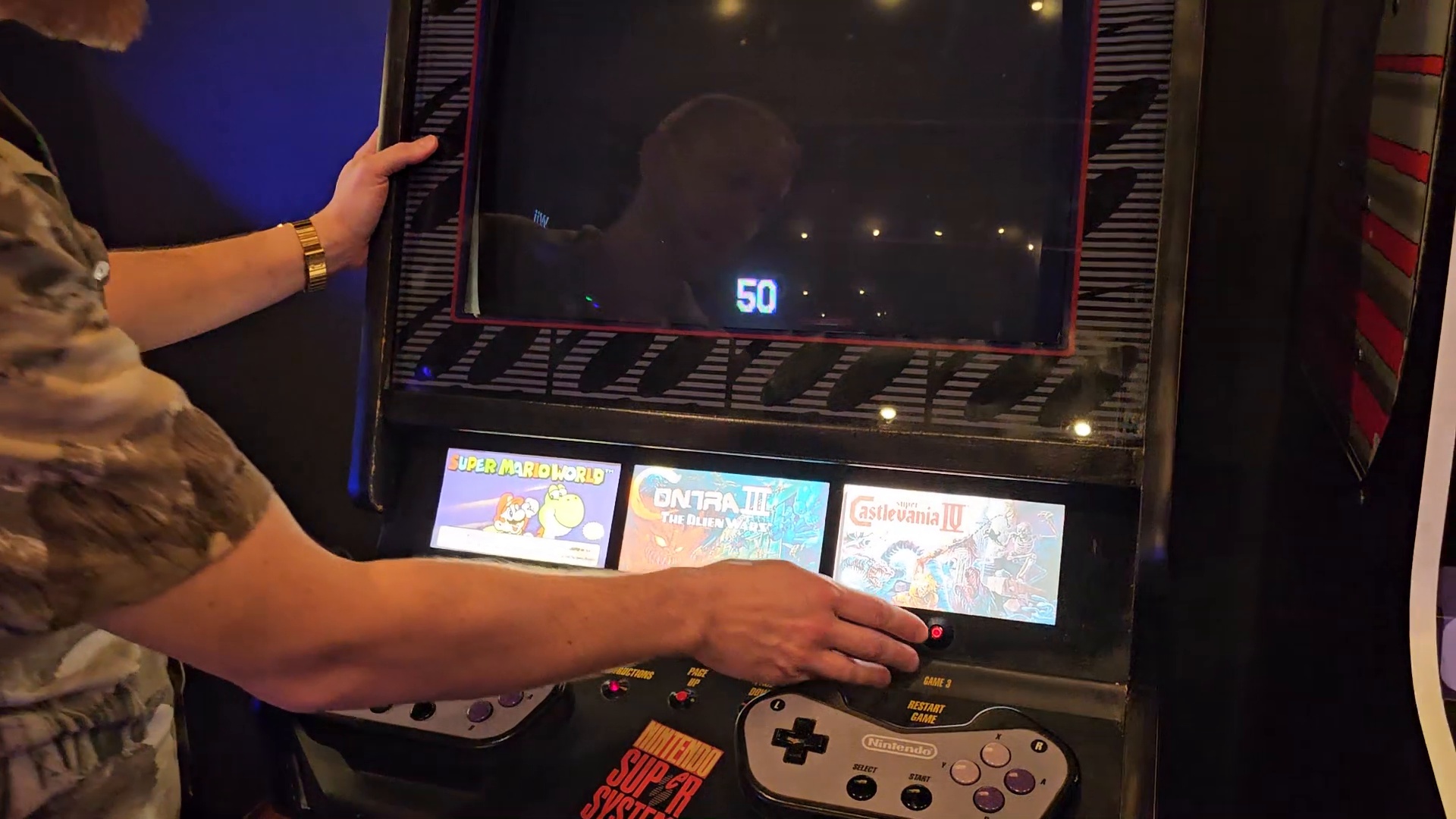
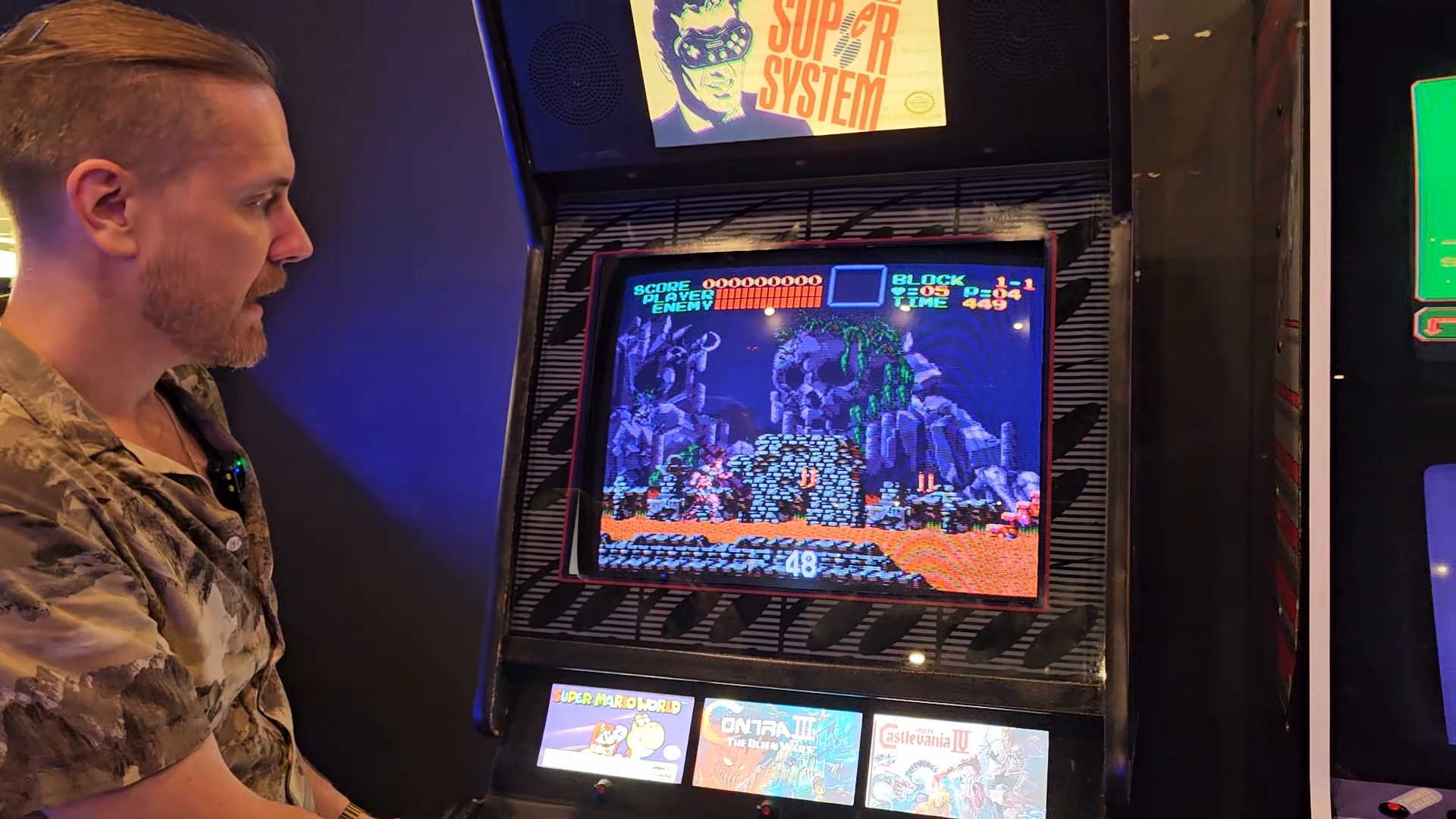
Original Super System games were designed around credits and timed play. Put money in, choose a game, and the system gives you a window of time to play. When that time runs out, the arcade hardware takes over again. The machine was essentially Nintendo asking a very early-’90s question: what if the home-console experience lived inside the arcade business model?
Nintendo introduced the Super System while the Super Nintendo itself was becoming the thing people wanted in their living rooms. The machine reportedly spent about 18 months in development, with Nintendo touting its custom 16-bit graphics hardware and digital sound when it reached operators in 1991.
In other words, Nintendo built an arcade cabinet that let you pay to play something increasingly similar to what players were buying for home.
That sounds questionable from a business standpoint. From a retro-gaming standpoint, however, it is fantastic.
The Super System became one of the last chapters of Nintendo of America’s old coin-operated arcade business. Nintendo announced in July 1992 that it was ending support for its arcade hardware, leaving the Super System as a fairly short-lived bridge between two completely different versions of Nintendo: the company that built arcade machines and the company that was rapidly taking over living rooms.
That is what makes finding one today so much more interesting than simply finding another way to play Super Nintendo games.
You are not just playing Contra III. You are playing Nintendo’s idea of what Contra III was supposed to look like standing in an arcade, with a coin mechanism, game-selection hardware, and another player beside you.
It is a strange little evolutionary branch in video-game history — one that did not become the future, but managed to survive long enough for us to keep pressing Start on it more than three decades later.
And around here, that is reason enough.
end of line…